
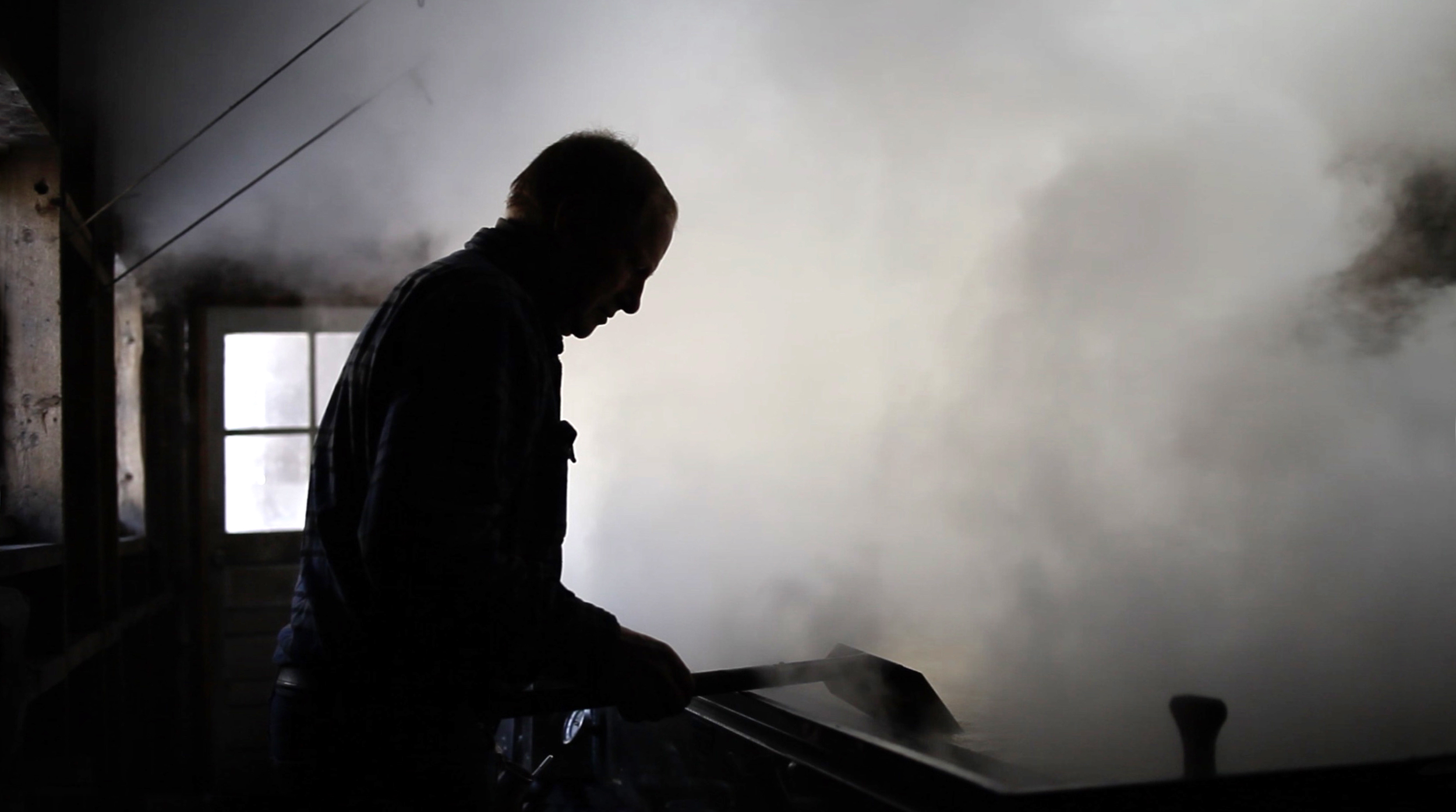


SUGARHOUSE (2025)
In rural Vermont, aging sugarmakers honor a centuries-old tradition in this powerful meditation on family legacy, loss, and resilience. Told through seven distinct portraits, the film forms a rich tapestry of stories about how we spend our time on this earth, what we inherit, and what we leave behind.
STATUS
Complete; Request a Screener
OFFICIAL SELECTION
Big Sky Documentary Film Festival - World Premiere (Finalist, Oscar®-qualifying Best Short Competition)
Green Mountain Film Festival
Made Here Film Festival (Winner, Special Jury Mention)
Apricot Tree International Documentary Film Festival
Vermont Film & Folklore Festival (Winner, Jury Award for Best Vermont Documentary Short)
Vizantrop Ethnographic Film Festival
DIRECTOR’S STATEMENT
Sugarhouse was made in Marlboro, Vermont — the place where I was born, raised, and live today. When producer Michelle Holzapfel asked me to make a film about our local sugarmakers, the town was struggling with the effects of social isolation. Our small liberal arts college had closed, our public school was struggling with low enrollment (and has since closed), and we were in a bit of an identity crisis. Michelle saw the film as a way to bring people back together, to celebrate the work of our town’s sugarmakers, and see the community reflected on screen. With sugaring season well underway, I started immediately, bogging down muddy roads, moving from sugarhouse to sugarhouse, and what started as a commissioned project would become my most personal work.
Told through seven portraits, the film becomes a meditation about time and impermanence. In one scene, fourth-generation sugarmaker Jerry Lundsted describes how his grandfather taught him the trade: “The way old Vermonters talk is they give you one little thing and let you figure that out, and then give you another little thing, and it won’t be all at once.” Little did I know, this philosophy would inform the entire structure of the film. With each vignette, the story unfolds, revealing itself, until it culminates to profound effect.
CAST
Fred Bisbee, Dan Elliot, Mike Fuller, Phil Howe, Liora Lindsay, Sabine Lindsay, Tess Lindsay, Jerry Lundsted, Dan MacArthur, Gail MacArthur, Gary, MacArthur, Louisa MacArthur, Milo MacArthur, Thorin MacArthur, Dave Matt, Eric Matt
CREW
Director/Producer - Jesse Kreitzer
Producers - Michelle Holzapfel, David Holzapfel
Executive Producers - Michele Hernandez Bayliss, Bruce Bayliss, Jacob Smith
Camera, Sound, Edit - Jesse Kreitzer
Original Score - Leander Holzapfel
Poster Design - Ben Mackey
Sound Mastering - Guilford Sound
Fiscal Sponsor - Vermont Folklife
Student Artwork Inspired by 'Sugarhouse' at Big Sky
As part of the Big Sky Film Institute’s “Filmmakers in the Schools” program, students in Missoula, Montana, watched Sugarhouse and created original illustrations inspired by the film and its themes.


WHERE TO PURCHASE SYRUP
Purchase directly from the sugarmakers featured in the film (in order of appearance):
JERRY LUNDSTED (Dalrymple)
134 South Road, Marlboro, VT 05344
MATT’S MAPLE SYRUP (Winchester)
• 370 Higley Hill Rd, Marlboro, VT
• New England House, 254 Marlboro Rd, Brattleboro, VT
• Smokin’ J’s, 1796 VT-9, Brattleboro, VT
• Starfire Bakery, 129 VT-9, Wilmington, VT
• Online ordering
MIKE FULLER (Higley)
NFS. “I just boil for myself and to give to family and hiking friends.”
FRED BISBEE (Jencks)
NFS. “For family and friends.”
GARY MacARTHUR (Ichobad)
• Wild Carrot Farm, 118 Fairly Wild Way, Brattleboro, VT
• Rebop Farm, 1320 Sunset Lake Rd, Brattleboro, VT
• Brattleboro Food Co-Op, 2 Main St, Brattleboro, VT
DAN MacARTHUR (King)
• Whetstone Ledges, 1000 MacArthur Rd, Marlboro, VT
• 778 MacArthur Road, Marlboro, VT (when in operation)
DAN ELLIOT (Whitney)
1926 Higley Hill Rd, Marlboro, VT
Only when in operation, or call for orders: 802-380-3401
A MESSAGE FROM FARHAD Varhram
Renowned Iranian ethnographic filmmaker Farhad Varahram shares his written remarks on Sugarhouse at the 12th Annual Apricot Tree International Film Festival in Debed, Armenia, where he served as a juror:
Photo by Mane Hovhannisyan
The film portrays the multi-generational tradition and way of life of maple sugar producers in a rural region of Vermont—a practice passed down as a heritage from one generation to the next. The film’s visuals are seamlessly attuned to the region’s natural and indigenous environment, reflecting the director’s deep familiarity with the land. As an ethnographic film, it successfully weaves together the lives of several people united by the shared craft of sugar production. Life in this region seems to move at a calm, measured pace, centered around the harvesting of tree sap, steam, smoke, boiling sap, and workers whose primary connection is to the trees, the boiling process, and the tools used to transform sap into sugar.
At times, the camera observes the workers from behind a pane of glass, creating an opaque, semi-transparent atmosphere. At other times, it moves inside the workshop, engaging directly with the workers. One of the film’s notable features is its use of oral history: the workers are interviewed, and their voices are incorporated as voice-over. Structured in multiple acts, with each worker individually recounting a story, the film takes on the character of a multi-act play.
Throughout the film, the workers’ lives bear witness to a monotonous, repetitive flow, a theme reinforced by their behavior and speech. Yet toward the end of the film, children appear, playing and frolicking. Their presence perhaps suggests that life in this aged and somewhat dreary environment may continue, taking on a different rhythm and flowing in a new direction.
تصاویر فیلم هماهنگی و همنشینی کاملی با محیط طبیعی و بومی منطقه دارند و آشنایی عمیق کارگردان با این سرزمین را بازتاب میدهند. فیلم، بهعنوان اثری اتنوگرافیک، زندگیهای گوناگونی را که بهواسطهٔ حرفهٔاین فیلم روایتگر سنت و شیوهٔ زندگی چندنسلیِ تولیدکنندگان شکر افرا در منطقهای روستایی از ورمونت است؛ سنتی که همچون میراثی از گذشته به نسلهای آینده منتقل میشود.
مشترک تولید شکر به یکدیگر پیوند خوردهاند، بهخوبی در هم میتند. زندگی در این منطقه گویی با آهنگی آرام و یکنواخت جریان دارد؛ حول جمعآوری شیرهٔ درختان، بخار، دود، جوشاندن شیره و کارگرانی که تنها پیوندشان با یکدیگر درختان، فرایند جوشاندن و ابزارهایی است که برای تبدیل شیره به شکر به کار میروند.
گاهی دوربین کارگران را از پشت شیشهای ثبت میکند و فضایی مات و نیمهشفاف میآفریند. گاهی نیز دوربین وارد کارگاه میشود و مستقیماً با کارگران همراه میگردد. یکی از ویژگیهای قابل توجه فیلم، استفاده از روش تاریخ شفاهی است: گفتوگو با کارگران و استفاده از این مصاحبهها بهصورت نریشن روی تصاویر. فیلم در چند پرده ساختاربندی شده است؛ در هر پرده، یکی از کارگران بهتنهایی داستانی را روایت میکند و از این نظر، اثر به نمایشی چندپردهای شباهت پیدا میکند.
زندگی کارگران در سراسر فیلم شاهد جریانی یکنواخت و تکرارشونده است؛ موضوعی که رفتار و گفتار آنان نیز بر آن تأکید میکند. بااینحال، در پایان فیلم، کودکانی را میبینیم که بازی میکنند و به اینسو و آنسو میدوند؛ حضور این کودکان شاید نوید آن را میدهد که زندگی در این محیط سالخورده و دلگیر میتواند ادامه پیدا کند و به شکلی متفاوت جریان یابد.
NEWSLETTER ARCHIVE
Mar 2026 - Big Sky Wrap Up; Vermont Premiere
Feb 2026 - Finalist in Oscar®-qualifying Best Short Competition
Jan 2026 - World Premiere at Big Sky
Dec 2025 - Film Transfer Fundraiser
Aug 2025 - Project Announcement
PRESS
Seven Days, Three Local Short Films Explore Vermont’s Food Scene

